




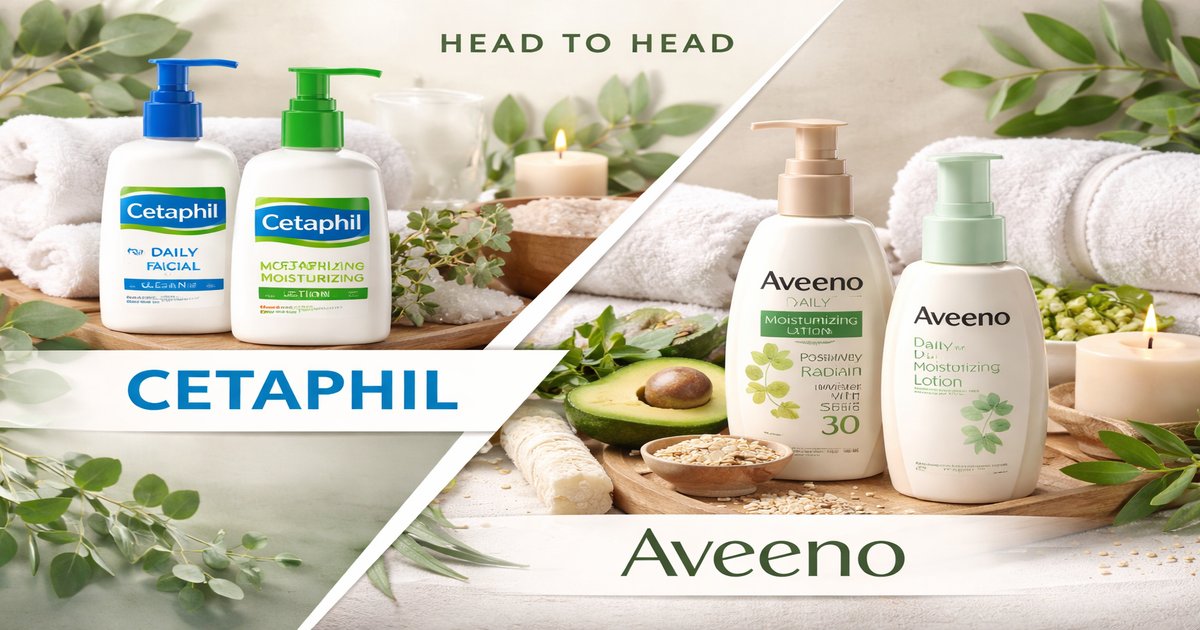
You’ve found yourself in the skincare aisle, staring at rows of bottles and wondering which one won’t leave your skin feeling like a desert. Cetaphil and Aveeno are both vying for a spot in your skincare routine, but which one really delivers on its promises? Let’s break it down so you don’t have to deal with buyer’s remorse later.
| Feature | Cetaphil | Aveeno |
|---|---|---|
| Skin Type | All types | Dry and sensitive |
| Fragrance-Free | ✓ | ✓ |
| Key Ingredients | Glycerin, Panthenol | Colloidal oatmeal, Glycerin |
| Paraben-Free | ✓ | ✓ |
| SPF Protection | ✗ | ✓ (in some products) |
| Price Range | $$ | $$$ |
✅ cetaphil Pros
- Highly affordable and widely available.
- Gentle enough for everyday use, even on sensitive skin.
- Minimalistic formula reduces risk of irritation.
❌ cetaphil Cons
- Lacks advanced moisturizing ingredients for very dry skin.
- No SPF protection in most products.
✅ aveeno Pros
- Contains colloidal oatmeal, great for soothing irritated skin.
- Offers products with SPF protection.
- Rich, creamy texture ideal for dry skin.
❌ aveeno Cons
- Generally more expensive than Cetaphil.
- Some products have a thicker consistency that might not suit oily skin.
Performance
Cetaphil is the go-to for those who want something straightforward and reliable. It cleanses without stripping your skin, making it a staple for anyone with combination or sensitive skin. Aveeno, however, steps up the game with its colloidal oatmeal, which is a lifesaver for dry, flaky skin. If you’re dealing with eczema or any form of irritation, Aveeno is hard to beat in terms of soothing capabilities.
Value for Money
If you’re budget-conscious, Cetaphil will be your best friend. It’s affordable and does exactly what it promises—no frills. Aveeno is pricier, but you get a more luxurious feel and added benefits like SPF in some products. If you’re looking for a single product to handle multiple concerns like moisture and sun protection, Aveeno might justify the higher price tag.
Build Quality
Cetaphil tends to have a more clinical, no-nonsense packaging that reflects its straightforward nature. It focuses on what’s inside rather than aesthetics. Aveeno, on the other hand, offers a more premium feel with its packaging, which matches its richer formula. If presentation matters to you, Aveeno is a step ahead.
Neither Cetaphil nor Aveeno will magically transform your skin overnight. Cetaphil’s simplicity is both its strength and its weakness; it won’t exacerbate issues, but it might not solve them either. Aveeno’s richness is fantastic for dry skin but could be overkill for oily types. Always patch test before committing to full use.
Our Final Verdict: Which One Should You Buy?
If you’re looking for an everyday cleanser that’s gentle, budget-friendly, and effective, Cetaphil is your best bet. It’s perfect for those who don’t want to think too much about their skincare but still want decent results. For those with dry or sensitive skin who are willing to invest a bit more for added benefits like soothing oatmeal and SPF, Aveeno is the way to go. It’s particularly suited for people dealing with skin conditions like eczema or chronic dryness.
Is Cetaphil suitable for oily skin?
Yes, Cetaphil is non-comedogenic, which means it won’t clog pores and is suitable for oily skin types.
Does Aveeno offer products for acne-prone skin?
While Aveeno is primarily targeted at dry and sensitive skin, they do offer specific lines designed to address acne concerns.
How long does a bottle of Cetaphil or Aveeno last?
Depending on usage, a standard bottle can last 1-2 months. Aveeno’s thicker formulas might be used up faster due to their rich consistency.