






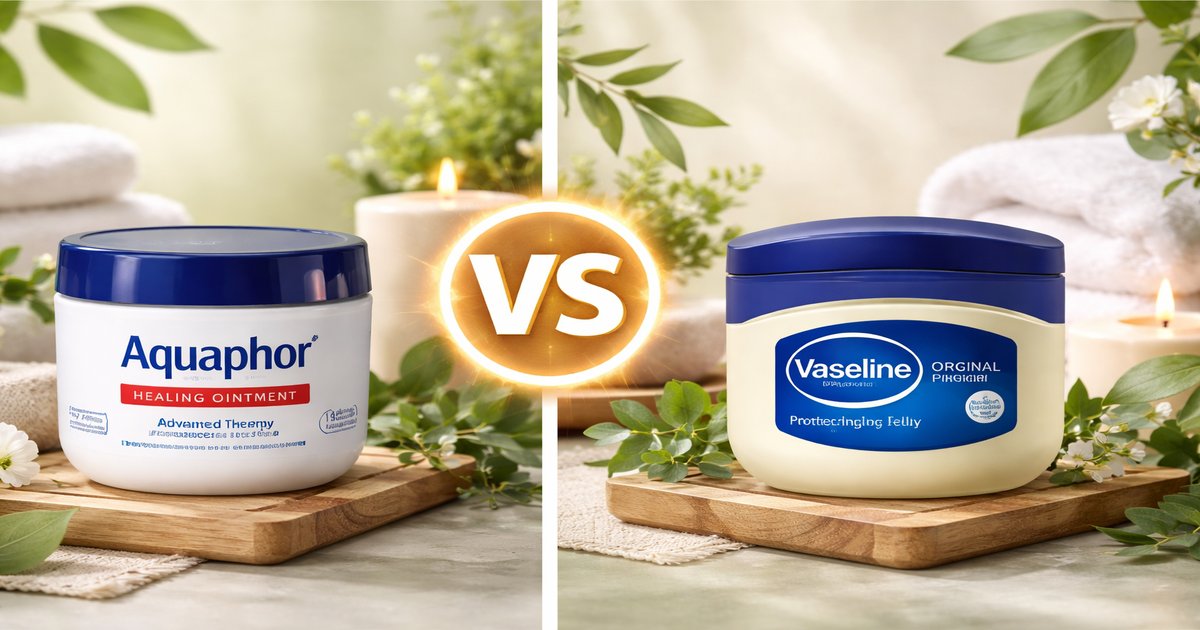
You’ve just come back from an epic mountain bike ride, and your skin feels like it’s been through a sandblaster. Do you reach for Aquaphor or Vaseline to bring your skin back to life? Both are legendary skin protectants, but which one actually deserves a spot in your drawer?
| Feature | Aquaphor | Vaseline |
|---|---|---|
| Main Ingredient | Petrolatum (41%) | Petrolatum (100%) |
| Added Ingredients | ✓ Panthenol, Glycerin, Bisabolol | ✗ None |
| Moisturizing Properties | ✓ Enhanced | ✓ Basic |
| Texture | ✓ Thicker, Creamy | ✓ Smooth, Oily |
| Fragrance-Free | ✓ | ✓ |
| Price per Ounce | Higher | Lower |
✅ aquaphor Pros
- Contains additional skin-nourishing ingredients.
- Effective for extremely dry or cracked skin.
- Less greasy finish compared to Vaseline.
❌ aquaphor Cons
- Pricier than Vaseline.
- May feel too thick for some users.
✅ vaseline Pros
- Cost-effective for daily use.
- Highly effective at locking in moisture.
- Simple formulation with no additives.
❌ vaseline Cons
- Greasy texture can be off-putting.
- Lacks additional skin-repairing ingredients.
Performance: Moisture Retention and Skin Repair
Aquaphor takes the lead in moisture retention, thanks to its blend of petrolatum, panthenol, glycerin, and bisabolol, which work together to soothe and repair severely dry skin. It’s ideal for those prone to eczema or who need intense healing after skin treatments. On the other hand, Vaseline, with its 100% petrolatum formula, is great for basic moisture retention. It’s like a plastic wrap for your skin, sealing in whatever moisture is already there, but don’t expect it to do any heavy lifting in the skin repair department.
Texture and Application Experience
Aquaphor is noticeably thicker and creamier, which makes it more pleasant for people who hate the idea of feeling greasy all day. It absorbs better than Vaseline, leaving a slightly less oily residue. If you’re using it on your face or hands before bed, you’ll appreciate not sticking to your pillow or keyboard. Vaseline, however, is straightforward and slick. It feels more like a protective barrier, which is great for preventing chafing during workouts but less ideal if you’re looking for comfort during daily wear.
Value for Money
Vaseline is the clear winner in terms of cost-effectiveness. If you’re on a budget and need a reliable, no-frills moisturizer, it’s the way to go. It’s also ideal if you need large quantities for activities like hiking or running, where you might need multiple applications. Aquaphor, while more expensive, offers better results for those with specific skincare needs like healing tattoos or dealing with severe dryness. It’s an investment in skin health that pays off if you need that extra care.
Few people will tell you that Aquaphor can sometimes cause allergic reactions due to its added ingredients—something to consider if you have sensitive skin. Vaseline, being more basic, won’t cause allergies but can clog pores if overused. Neither is a miracle product, so don’t expect overnight transformations.
Our Final Verdict: Which One Should You Buy?
If you’re someone who battles with severely dry skin, eczema, or needs post-treatment skin care, Aquaphor is your go-to. It’s worth the extra cost for the added ingredients that genuinely help with skin repair. For those who need a basic, effective barrier on a budget, especially for frequent use or protection during activities, Vaseline is unbeatable. It’s simple, affordable, and gets the job done without frills.
Does Aquaphor or Vaseline work better for eczema?
Aquaphor is generally better for eczema due to its additional ingredients that help soothe and repair damaged skin.
Can Vaseline clog pores?
Yes, Vaseline can potentially clog pores if used excessively, especially on the face. It’s best used on areas where you need a strong moisture barrier.
Is Aquaphor worth the extra cost over Vaseline?
If you have specific skin concerns like severe dryness or need post-treatment care, Aquaphor’s added ingredients make it worth the investment.