






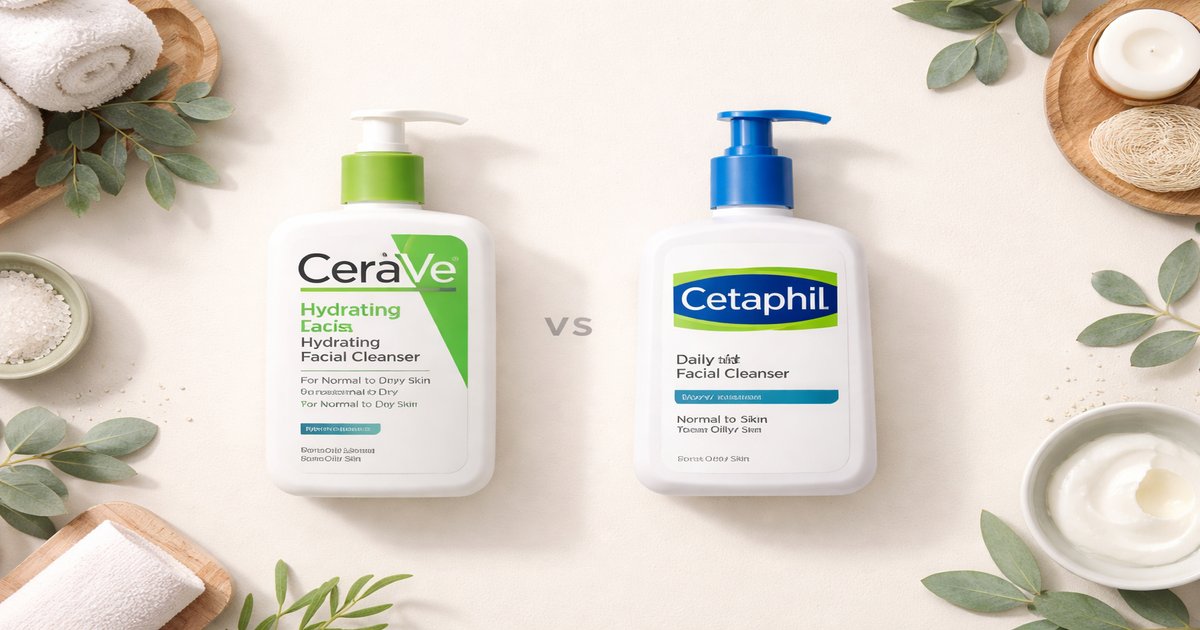
You’re standing in the skincare aisle, faced with two of the most popular cleansers: Cerave and Cetaphil. You’ve read countless articles, watched YouTube reviews, and maybe even asked friends, but you’re still torn between these two. Let’s break it down so you can finally make a decision you’ll feel confident about.
| Feature | Cerave Cleanser | Cetaphil Cleanser |
|---|---|---|
| Key Ingredients | Ceramides, Hyaluronic Acid | Glycerin, Panthenol |
| Suitable for Sensitive Skin | ✓ | ✓ |
| Fragrance-Free | ✓ | ✓ |
| Non-Comedogenic | ✓ | ✓ |
| Price (12 oz) | $14 | $11 |
| Packing Type | Pump Bottle | Flip Cap Bottle |
✅ cerave Pros
- Contains ceramides that help repair the skin barrier.
- Includes hyaluronic acid for hydration.
- Available in a convenient pump bottle for easy use.
❌ cerave Cons
- More expensive than Cetaphil.
- May feel a bit heavy on oily skin.
✅ cetaphil cleanser Pros
- Affordable and easily accessible.
- Lightweight formula suitable for oily skin.
- Simple ingredient list, good for sensitive skin.
❌ cetaphil cleanser Cons
- Lacks advanced hydrating ingredients like hyaluronic acid.
- Flip cap bottle can be less convenient in the shower.
Performance
Cerave’s formula is all about fortifying and hydrating your skin. Thanks to ceramides and hyaluronic acid, it does a fantastic job of retaining moisture and strengthening the skin barrier. If you have dry skin, this is your go-to cleanser. On the flip side, Cetaphil’s strength lies in its simplicity and lightweight nature. It’s perfect for those with oily or combination skin who want to keep things simple without compromising on cleanliness.
Build Quality
Cerave comes with a pump bottle, which is a godsend when your hands are slippery in the shower. It feels robust and well-designed, minimizing wastage. Cetaphil’s flip cap bottle, while decent, feels a notch below in terms of user experience. It can be a bit of a hassle to open and close, especially if you’re multitasking in the bathroom. However, it’s compact and travel-friendly, which is a plus if you’re on the go.
Value
Cetaphil takes the cake when it comes to affordability, costing a few bucks less than Cerave. If you’re budget-conscious or just starting out with skincare, Cetaphil offers a no-frills, effective solution. Cerave, while pricier, gives you more bang for your buck if you’re looking for added skin benefits like hydration and barrier repair. It’s worth the extra if those are priorities for you.
Both cleansers claim to be non-comedogenic, but don’t be surprised if your skin reacts differently. Some users have reported breakouts with both, so patch test if you’re prone to acne. Also, despite being fragrance-free, each has a distinct, albeit mild, scent that might not be everyone’s cup of tea.
Our Final Verdict: Which One Should You Buy?
For those with dry or sensitive skin who prioritize hydration and barrier repair, Cerave is the better option despite its higher price. The formula is thoughtfully designed for maximum skin health. If you’re more budget-conscious or have oily skin, Cetaphil’s straightforward approach and lighter formula make it a no-brainer. Both are excellent in their own rights, but each has its strengths depending on what your skin needs.
Is Cerave suitable for acne-prone skin?
Yes, Cerave is non-comedogenic and contains ingredients that support skin barrier repair, making it suitable for acne-prone skin.
Can I use Cetaphil cleanser every day?
Absolutely. Cetaphil’s gentle formula is designed for daily use, even for sensitive skin types.
Which cleanser is better for travel?
Cetaphil’s flip cap bottle is more compact and less prone to accidental spills, making it a better choice for travel.