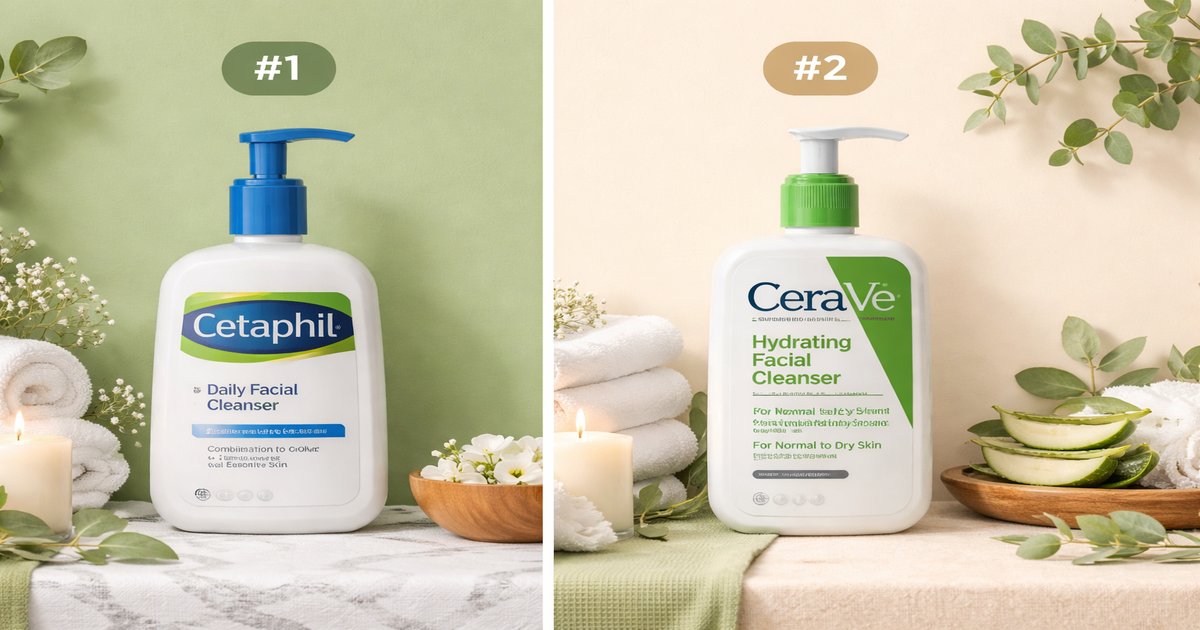







You’re standing in the skincare aisle, overwhelmed by choices, and you just want a cleanser that does the job without turning your face into a chemistry experiment. Cetaphil and CeraVe are staring back at you, both promising the world. Let’s break it down so you can make the right call for your skin type and needs.
| Feature | Cetaphil Cleanser | CeraVe Cleanser |
|---|---|---|
| Key Ingredients | Glycerin, Panthenol | Ceramides, Hyaluronic Acid |
| Suitable for Sensitive Skin | ✓ | ✓ |
| Fragrance-Free | ✓ | ✓ |
| Foaming Action | ✗ | ✓ |
| Price (per 16 oz) | $10 | $15 |
| Dermatologist Recommended | ✓ | ✓ |
✅ cetaphil cleanser Pros
- Gentle on even the most sensitive skin
- Affordable price point
- Easily available in most stores
❌ cetaphil cleanser Cons
- Doesn’t foam up
- May not remove heavy makeup effectively
- Basic formulation may lack advanced skincare benefits
✅ cerave Pros
- Contains skin-repairing ceramides
- Effective foaming action
- Hydrates with hyaluronic acid
❌ cerave Cons
- Pricier than Cetaphil
- Foaming can be drying for some users
- Packaging can be less user-friendly
Performance and Efficacy
When it comes to performance, CeraVe takes the cake if you’re looking for a cleanser that not only cleans but also offers additional skincare benefits. Its ceramides and hyaluronic acid work wonders for those battling dry or compromised skin barriers. However, if you have ultra-sensitive skin, Cetaphil’s gentle formula ensures that you won’t end up with redness or irritation, making it a go-to for those who need to play it safe.
Texture and User Experience
Texture-wise, Cetaphil offers a non-foaming, creamy experience, which feels like you’re applying a gentle lotion. It’s soothing but doesn’t give you that satisfying lather. CeraVe, on the other hand, foams up nicely, which some users find more satisfying and indicative of cleanliness. However, the foaming can be a double-edged sword, potentially leading to dryness if you already have a dry skin type.
Value for Money
Cetaphil wins in the cost department. At $10 for 16 oz, it’s a budget-friendly option for those who need a reliable, everyday cleanser. CeraVe, while more expensive at $15, offers additional skincare benefits that justify the extra cost if you can afford it. If you’re someone who likes to get the most bang for your buck, consider your skincare goals—basic cleansing or additional hydration and skin barrier repair.
Cetaphil is a classic, but let’s be real: it’s basic. It cleans without frills. CeraVe, while more sophisticated, can be a bit hit or miss. The foaming action could either make your skin feel squeaky clean or leave it thirsty. Also, don’t expect either to be your miracle makeup remover. You might need an extra step for that.
Our Final Verdict: Which One Should You Buy?
If you’re someone with ultra-sensitive skin or on a tight budget, Cetaphil is your best bet. It’s gentle, straightforward, and gets the job done without breaking the bank. For those who want a little extra nourishment and don’t mind spending more, go for CeraVe. Its inclusion of ceramides and hyaluronic acid makes it ideal for those dealing with dryness or compromised skin barriers.
Is Cetaphil or CeraVe better for acne-prone skin?
Both can work for acne-prone skin, but CeraVe’s foaming action might be more effective at removing excess oil, which can be beneficial for those with acne.
Can I use these cleansers with other skincare products?
Yes, both Cetaphil and CeraVe are designed to be used in conjunction with other skincare products. Just ensure your other products are compatible with your skin type.
How long does a bottle of each cleanser typically last?
A 16 oz bottle of either cleanser can last 2-3 months with daily use, depending on how much product you use each time.